
Overview
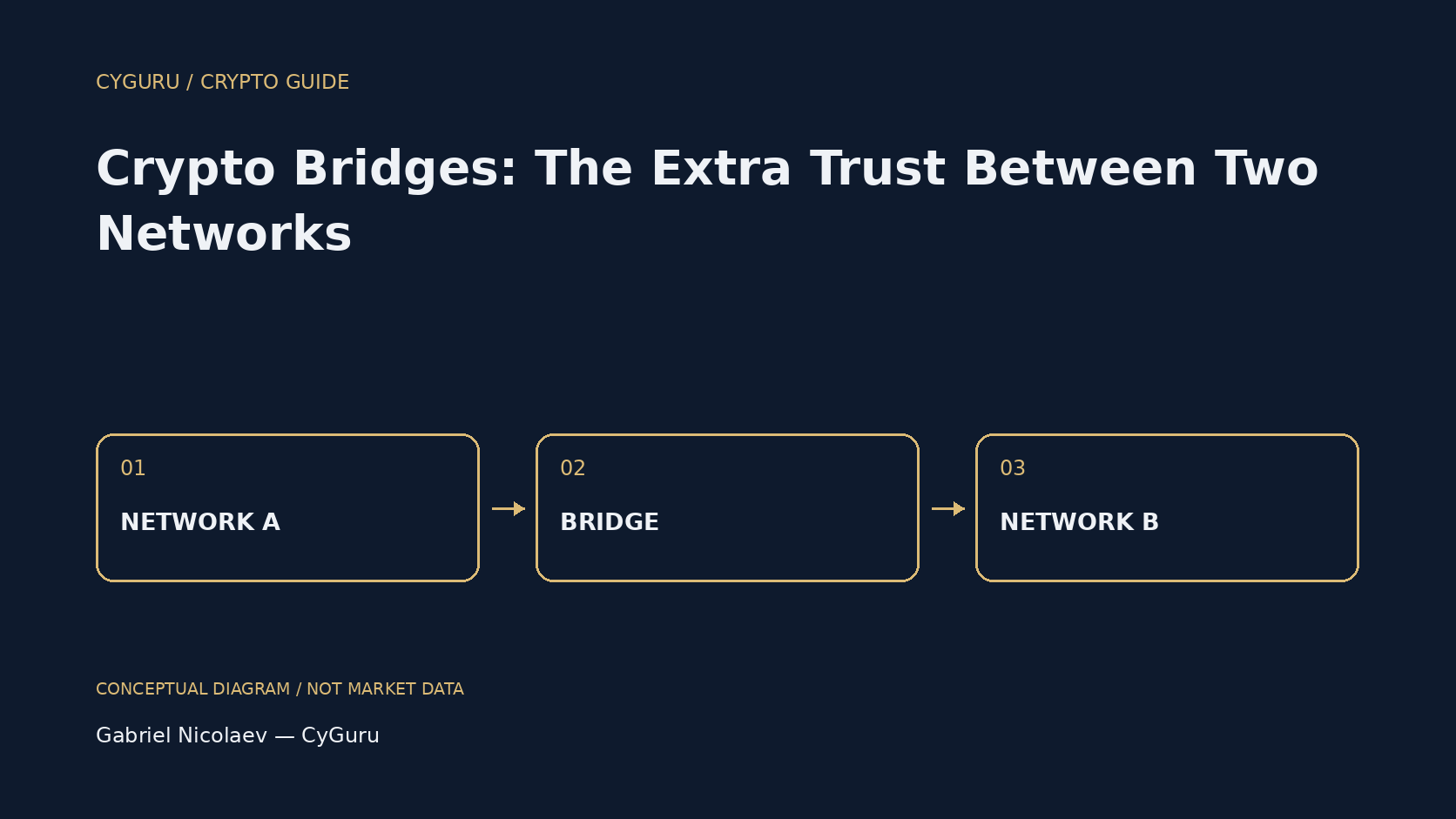
Moving value between networks can look like a short sequence of clicks. The more useful question is what has been added between the starting asset and the asset received. A bridge should be examined as a separate arrangement, with its own assumptions, rather than as an invisible extension of a wallet.
Inspect the connection, not just its endpoints
Ethereum’s bridge documentation describes risks including smart-contract vulnerabilities and differences in trust assumptions. A bridge may add mechanisms and participants beyond the security arrangements of either connected network. An audit is not a guarantee that every relevant failure has been excluded. These observations explain why confidence in a network does not automatically establish confidence in every bridge connected to it.
Define the asset that should arrive
For a hypothetical transfer, write down the starting network, destination network, asset identifier and expected form of the received asset. Do not rely only on a familiar ticker or logo. Record how the destination asset is supposed to be used and how a return journey would work. If those steps cannot be explained clearly before the transfer, the convenience of the interface has outrun your understanding of the transaction.
Make the exception path part of the comparison
A comparison should include the ordinary route and the route when something fails. Who provides status information? What evidence identifies a transaction? Is there a documented dispute or recovery process? A low displayed fee cannot answer these questions. Small test transactions can reveal an operational misunderstanding, but they cannot establish that an underlying protocol is secure or that a later larger transfer will succeed.
Use a reason for crossing, not a habit
The editorial test proposed here is simple: identify what necessary activity becomes possible on the destination network. If the only benefit is keeping up with a promotion, reconsider whether the added complexity serves a concrete purpose. Compare the total workflow, including the cost of returning. The companion custody guide helps distinguish control over an asset from confidence in an application. Fewer unexplained dependencies make a financial arrangement easier to assess.
Go deeper on CryptoGov
Sources & verification
Researched and published by CryptoGov Editorial Desk. Source publication and effective dates are explained in the article where relevant.


